Driving an Audi or Volkswagen offers a unique experience, known for precision engineering and advanced technology. However, when it comes to maintenance and repairs, these sophisticated vehicles demand more than just a standard approach. Understanding the specific needs of your German-engineered vehicle is crucial for its longevity and performance, and that often starts with specialized diagnostic tools that go beyond what generic scanners can offer. At The Car ER, we've seen firsthand how vital these specific tools are for accurate and efficient service.

The Intricate World of Audi and VW Electronics
Modern Audi and VW vehicles are engineering marvels, packed with complex electronic control units (ECUs) that manage everything from engine performance and transmission shifts to advanced driver-assistance systems (ADAS) and infotainment. Unlike older vehicles or less complex models, these cars feature deeply integrated systems that communicate using proprietary protocols. A basic OBD-II scanner, while useful for fundamental emission-related codes, simply cannot delve into the intricate network of modules to accurately identify issues with these advanced systems. It's like trying to understand a complex novel by only reading the chapter titles.

Beyond Basic Codes: The Need for Deep-Level Diagnostics
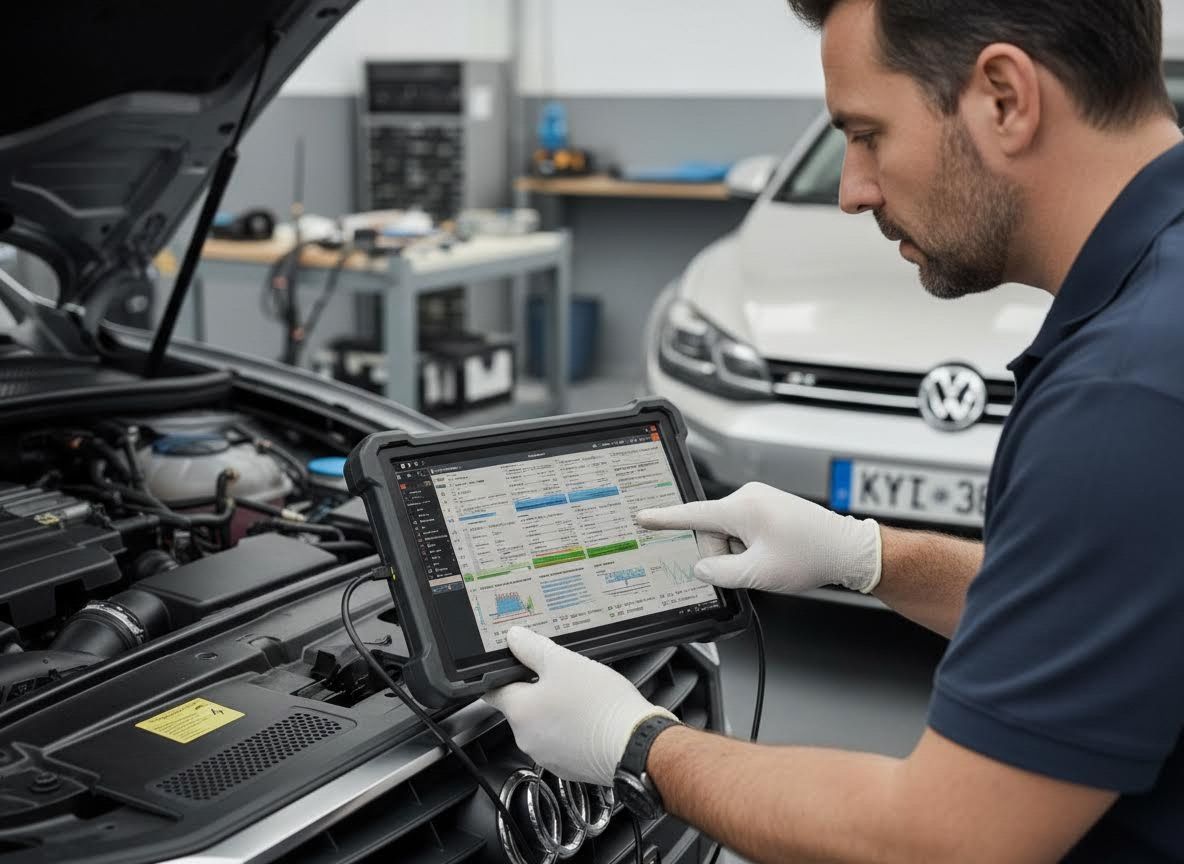
For Audi and VW models, proper diagnosis requires access to manufacturer-specific fault codes, live data streams, and the ability to perform adaptations and coding. These are functionalities only available through specialized diagnostic software and hardware. These tools allow technicians to:
Pinpoint the exact cause of a warning light or performance issue, rather than guessing.
Access module-specific data that reveals subtle problems before they become major failures.
Recalibrate and code new components (like batteries, sensors, or control modules) to integrate seamlessly with the car's existing systems.
Perform service functions, such as resetting service intervals or performing electronic brake pad replacements, safely and correctly.Without these capabilities, even seemingly simple repairs can lead to ongoing issues or incorrect operation of critical vehicle functions.

Ensuring Precision and Preventing Costly Mistakes
Using the right diagnostic tools isn't just about reading codes; it's about ensuring the precision and integrity of every repair. For instance, replacing a component on an Audi or VW often requires the new part to be "coded" or "adapted" to the vehicle's ECU. Failure to do so can result in the component not functioning correctly, or even worse, damaging other parts of the system. Specialized tools allow for this critical step, ensuring that repairs are not only effective but also prevent future headaches and unnecessary expenses. This meticulous approach safeguards your vehicle's performance, safety features, and resale value.
Maintaining an Audi or Volkswagen requires a nuanced understanding of their specific engineering and technological demands. Relying on generic diagnostic methods can lead to misdiagnoses, incomplete repairs, and potentially more significant problems down the road. For accurate, reliable, and thorough service that respects the complexity of your vehicle, choosing a shop equipped with specialized diagnostic tools is paramount. If you own an Audi or VW and want to ensure it receives the expert care it deserves, we invite you to learn more about our diagnostic capabilities and how The Car ER can keep your vehicle running smoothly.