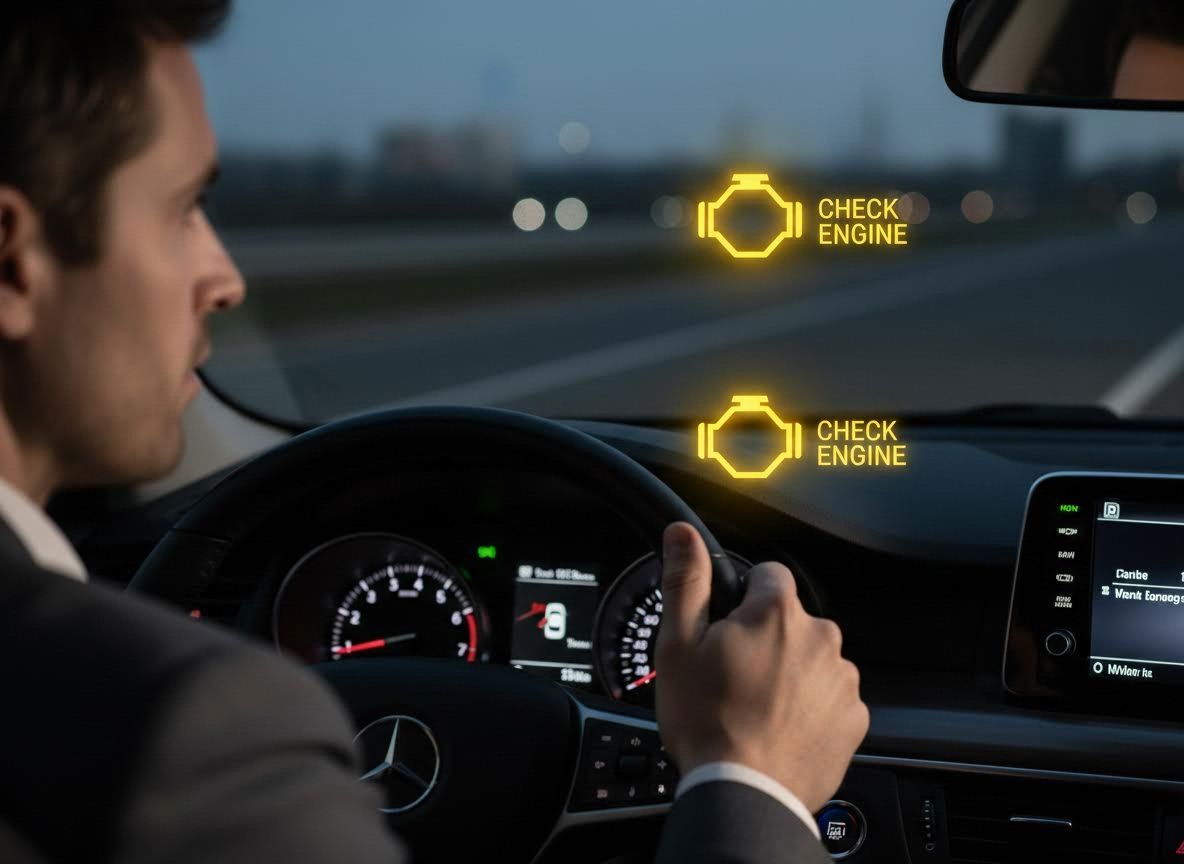
Seeing your check engine light illuminate on the dashboard can instantly make your heart skip a beat. It's a common concern for many car owners, and understanding what this warning light is trying to tell you is the first step towards resolving the issue. At The Car ER, we believe in empowering our community with knowledge, so you can make informed decisions about your vehicle's health. There's a significant difference between a solid check engine light and one that's flashing, and knowing this can help you react appropriately and protect your vehicle. Let's break down what each scenario means and what steps you should take immediately.

When Your Check Engine Light is Solid
A solid check engine light indicates that your vehicle's onboard diagnostic (OBD-II) system has detected a problem that, while serious, might not require immediate, emergency attention. It's a warning that something isn't right and needs to be looked at soon. Common reasons for a solid light include a loose or faulty gas cap, which can affect your fuel system's pressure and emissions. Other potential culprits could be a failing oxygen sensor, an issue with spark plugs or ignition coils, or even a problem with your catalytic converter. While your car might seem to be running fine, ignoring a solid check engine light can lead to decreased fuel efficiency, increased emissions, and potentially more costly repairs down the line if the underlying issue isn't addressed.

When Your Check Engine Light is Flashing
A flashing check engine light is a much more urgent signal from your vehicle and should not be ignored. This indicates a severe problem, typically a misfire in one or more cylinders, that is actively causing damage to critical components, most notably your catalytic converter. The catalytic converter is an expensive part of your exhaust system designed to reduce harmful emissions. When raw, unburnt fuel enters the exhaust and reaches the converter, it can cause extreme heat, leading to irreversible damage. If you see a flashing check engine light, you should immediately reduce speed, avoid harsh acceleration, and try to get to a trusted auto repair shop as safely and quickly as possible. Continued driving with a flashing light can lead to thousands of dollars in repairs.

The Importance of Professional Diagnosis
Regardless of whether your check engine light is solid or flashing, accurate diagnosis is key. Modern vehicles are complex machines, and simply guessing at the cause can be a costly mistake. Professional technicians use specialized diagnostic tools, known as OBD-II scanners, to retrieve specific trouble codes stored by your car's computer. These codes point to the system or component that is malfunctioning, allowing for a precise and efficient repair. Attempting to fix the problem yourself without proper diagnostic information can often lead to further complications or unnecessary part replacements. A reliable auto repair shop will not only read the codes but also perform thorough inspections to confirm the root cause, ensuring a long-lasting solution.
Understanding the signals your car sends through its check engine light is vital for its longevity and your peace of mind. Whether it's a steady glow or an urgent flash, acting promptly and wisely can save you from more significant headaches and expenses down the road. If you're seeing that unwelcome light, don't hesitate to reach out to The Car ER. Our team is ready to provide transparent and trustworthy diagnostics and repairs, ensuring your vehicle is back on the road safely and efficiently. We invite you to contact us or stop by to have your vehicle thoroughly inspected by our experienced technicians.